2026 Challenging Negative Thoughts CBT: A Powerful Tool for Mental Wellness
In an ever-evolving world, mental health has become a focal point for many individuals seeking balance and clarity. Among the most effective approaches to managing negative thinking patterns is 2026 Challenging Negative Thoughts CBT, a modern adaptation of Cognitive Behavioral Therapy (CBT) that empowers individuals to take control of their thoughts and emotions. This approach is designed not only to help people understand the root causes of their negative thinking but also to equip them with practical tools to reframe and challenge those thoughts in real-time.
2026 Challenging Negative Thoughts CBT is particularly relevant in 2026, as more people are turning to self-help resources and digital tools to support their mental wellness journeys. Whether you're dealing with anxiety, depression, or simply looking to improve your overall mindset, this method offers a structured yet flexible way to address unhelpful thought patterns.
Understanding 2026 Challenging Negative Thoughts CBT
Cognitive Behavioral Therapy has long been recognized as one of the most effective forms of psychotherapy for treating a wide range of mental health issues. 2026 Challenging Negative Thoughts CBT builds on these foundational principles by incorporating contemporary strategies that make the process more accessible and user-friendly. At its core, this approach helps individuals identify automatic negative thoughts—those intrusive, often irrational beliefs that can lead to emotional distress.
The key component of 2026 Challenging Negative Thoughts CBT is the "thought record" technique. This involves writing down negative thoughts, evaluating their accuracy, and replacing them with more balanced, positive alternatives. By doing so, individuals learn to recognize the difference between objective reality and distorted thinking, which is essential for long-term mental well-being.
Challenges and Situations That Benefit from 2026 Challenging Negative Thoughts CBT
Many people face situations where negative thoughts can significantly impact their quality of life. Common challenges include:
- Anxiety and stress related to work or personal relationships
- Feelings of inadequacy or low self-esteem
- Overthinking and rumination
- Difficulty coping with past trauma or setbacks
- Struggles with decision-making and self-doubt
2026 Challenging Negative Thoughts CBT is especially beneficial for those who find themselves stuck in cycles of negative thinking. It provides a clear framework for identifying and challenging these thoughts, making it easier to break free from harmful patterns. Whether you're dealing with daily stressors or more complex mental health concerns, this method can be adapted to suit your unique needs.
How 2026 Challenging Negative Thoughts CBT Helps Address These Situations
One of the greatest strengths of 2026 Challenging Negative Thoughts CBT is its focus on practical, actionable steps. Unlike traditional therapy, which may require frequent sessions with a professional, this approach allows individuals to work independently or with minimal guidance. The following are some ways it can help:
1. Identifying Automatic Negative Thoughts: The first step in 2026 Challenging Negative Thoughts CBT is learning to recognize when negative thoughts arise. This can be done through journaling or using a thought tracker, which helps you document your thoughts and the situations that trigger them.
2. Challenging Negative Beliefs: Once a negative thought is identified, the next step is to evaluate its validity. Are there facts that contradict this belief? Is it based on assumptions or past experiences? This process encourages critical thinking and helps replace unhelpful ideas with more realistic ones.
3. Developing Positive Self-Talk: A crucial part of 2026 Challenging Negative Thoughts CBT is cultivating a more compassionate and supportive inner voice. By practicing positive self-talk, individuals can gradually shift their mindset from one of self-criticism to self-compassion.
4. Building Resilience: Over time, consistent practice with 2026 Challenging Negative Thoughts CBT can enhance emotional resilience. Individuals become better equipped to handle difficult situations without falling into the trap of negative thinking.
Practical Applications and Outcomes
Whether you're using 2026 Challenging Negative Thoughts CBT as a standalone tool or in conjunction with other therapeutic methods, the outcomes can be transformative. Here are some common benefits:
- Improved Emotional Regulation: By learning to challenge negative thoughts, individuals gain greater control over their emotional responses.
- Increased Self-Awareness: Regular practice fosters a deeper understanding of one's thought patterns and how they affect behavior.
- Enhanced Problem-Solving Skills: As individuals develop a more balanced perspective, they become better at approaching problems with clarity and confidence.
- Greater Overall Well-Being: The cumulative effect of shifting negative thinking patterns can lead to improved mood, better relationships, and a more fulfilling life.
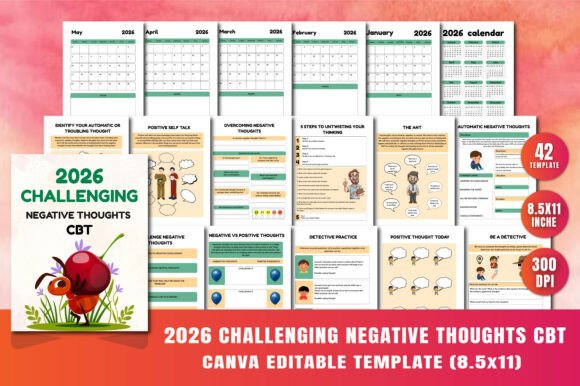
To get started with 2026 Challenging Negative Thoughts CBT, consider using a printable Thought Record Chart or a Negative vs. Positive Thoughts worksheet. These tools are available in various formats, including PDFs and editable Canva templates, making it easy to customize the process to fit your lifestyle and preferences.
Who Can Benefit from 2026 Challenging Negative Thoughts CBT?
2026 Challenging Negative Thoughts CBT is suitable for a wide range of individuals, regardless of age or background. Some common users include:
- People experiencing mild to moderate anxiety or depression
- Students or professionals dealing with high-stress environments
- Individuals recovering from trauma or past emotional pain
- Those looking to build resilience and improve self-esteem
- Anyone interested in developing a more positive and empowering mindset
While the method is highly effective, it's important to note that everyone's journey is unique. Some people may find that combining 2026 Challenging Negative Thoughts CBT with other therapeutic techniques, such as mindfulness or journaling, yields even better results.
Conclusion
2026 Challenging Negative Thoughts CBT offers a powerful, accessible, and effective way to manage negative thinking patterns and improve mental well-being. By focusing on practical, evidence-based strategies, this approach empowers individuals to take charge of their thoughts and emotions. Whether you're just beginning your mental wellness journey or looking to refine your current practices, 2026 Challenging Negative Thoughts CBT can be a valuable resource in achieving lasting change.