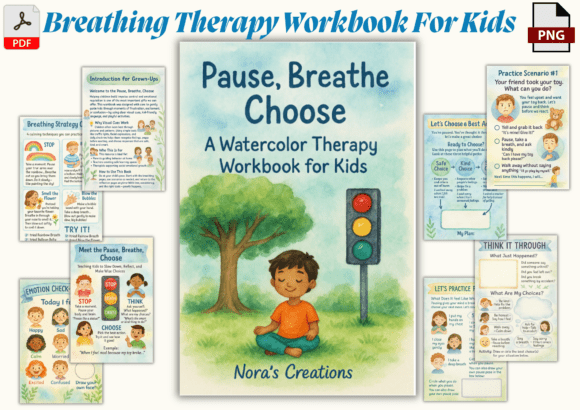
Pause, Breathe, Choose
Designed for children aged 5 to 10, Pause, Breathe, Choose – A Watercolor Therapy Workbook for Kids is more than just a coloring book. It’s a therapeutic tool that combines mindfulness, emotional regulation, and creative expression in a way that feels safe, engaging, and effective. With its soft watercolor illustrations and interactive pages, this workbook offers a calming experience that helps kids navigate big emotions and make thoughtful choices.
The visual style of the workbook is warm and inviting, with pastel hues and gentle brushstrokes that evoke a sense of peace. The watercolor aesthetic creates a comforting environment where children can explore their feelings without judgment. Each page is designed to guide them through a process of self-awareness and reflection, making it an ideal resource for parents, teachers, therapists, and homeschoolers looking to support emotional development in young learners.
A Visual Language of Calm
The artwork in Pause, Breathe, Choose is not just decorative—it serves as a visual language that supports the workbook’s core purpose: helping kids manage stress and build emotional resilience. The use of soft, flowing lines and muted tones creates a sense of safety and calm, encouraging children to slow down and focus on their breath.
This approach aligns with modern design principles that prioritize user experience and psychological comfort. In branding and editorial design, such visuals are often used to create a welcoming atmosphere, whether in print or digital formats. For instance, a similar aesthetic could be applied in children’s educational materials, wellness apps, or even branding for therapy-related services.
Empowering Through Design
One of the key strengths of Pause, Breathe, Choose is how it integrates design elements with therapeutic techniques. The “Stop → Breathe → Think → Choose” method is visually supported by the layout and illustrations, making it easier for children to follow along and internalize the process. This synergy between form and function is essential in both creative and therapeutic contexts.
When designing for younger audiences, especially those learning emotional regulation, the visual style plays a crucial role in engagement. A watercolor-inspired design like this one encourages creativity while maintaining a soothing tone, which is particularly valuable in settings like classrooms, counseling rooms, or home environments.
Choosing the Right Tool for the Job
Whether you're a designer, educator, or parent, selecting the right resource for emotional learning requires careful consideration of both content and presentation. Pause, Breathe, Choose exemplifies how a well-designed workbook can serve multiple purposes—educational, therapeutic, and creative—all at once.
For designers working on children’s projects, the workbook’s visual style offers inspiration for creating materials that are both functional and aesthetically pleasing. From social-emotional learning (SEL) programs to classroom activities, the ability to blend therapeutic content with appealing visuals is a powerful asset.
Practical Applications Across Projects
The flexibility of the workbook makes it suitable for a wide range of applications. Teachers can use it as part of a classroom curriculum focused on emotional intelligence, while therapists might incorporate it into sessions to help clients develop self-regulation skills. Parents can also benefit from its interactive worksheets and journaling prompts, which provide structured opportunities for meaningful conversations with their children.
Additionally, the high-quality PNG files included in the workbook make it easy to adapt for digital use. Whether it's for social media graphics, web design, or printable resources, the versatility of the format ensures that the content remains accessible and usable across different platforms.
Designing with Purpose and Care
Creating a resource like Pause, Breathe, Choose requires not only artistic skill but also a deep understanding of child psychology and emotional development. The workbook’s creators have successfully combined these elements to produce a product that is both visually appealing and emotionally supportive.
When designing for children, it’s important to consider how typography, color, and imagery contribute to the overall message. In this case, the watercolor style enhances the therapeutic intent, reinforcing the idea that emotional growth is a gentle, nurturing process. This kind of thoughtful design is especially valuable in branding and marketing, where consistency and emotional resonance are key to building trust and engagement.
Testing and Refining for Impact
Before finalizing any design project, it’s essential to test how the visual elements interact with the intended audience. For Pause, Breathe, Choose, this means ensuring that the watercolor illustrations are not only beautiful but also effective in guiding children through the therapeutic process. Testing font pairings, layout variations, and color schemes can help refine the design to better meet the needs of its users.
Additionally, considering factors like readability and accessibility is crucial. While the watercolor style may be visually rich, it should still allow for clear communication of the workbook’s purpose. This balance between aesthetics and functionality is what makes the resource so effective in real-world settings.
Building a Brand Around Emotional Wellness
For publishers, content creators, and small business owners, Pause, Breathe, Choose serves as an excellent example of how to integrate therapeutic content with creative design. By focusing on emotional wellness, the workbook taps into a growing market that values holistic approaches to child development.
Branding efforts that align with this mission can benefit from the same design principles used in the workbook—warm colors, calming visuals, and a strong emphasis on empathy and growth. Whether it’s for a children’s publishing company, a wellness brand, or an educational platform, the success of Pause, Breathe, Choose demonstrates the power of combining art with purpose.