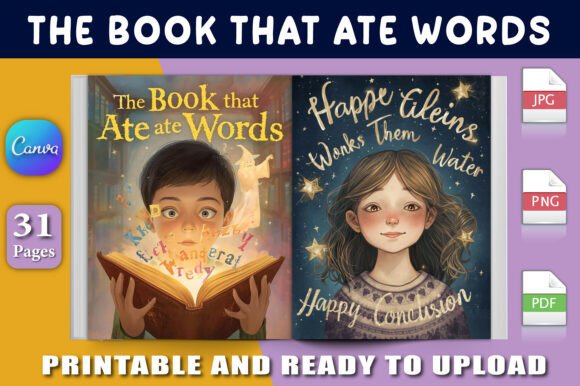
The Book That Ate Words
In a quiet library tucked away from the bustling world, there lived a curious child named Milo. Milo loved stories more than anything else in the world. Every evening, he would curl up on the floor with his favorite book, letting the words carry him to faraway lands and magical adventures. But one day, something extraordinary happened that changed everything.
The Glowing Book
While exploring the dusty shelves of the library, Milo stumbled upon a book unlike any other. It was old, worn, and covered in dust, but as he reached for it, the cover shimmered with a soft glow. The book pulsed with an energy that made Milo’s heart race. He opened it, and suddenly, letters floated into the air, swirling around him like fireflies. A deep voice echoed through the room, and out of the shadows stepped a wizard, his eyes wide with hunger.
The Hungry Wizard
"I am the wizard of stories," the wizard said, his voice both kind and desperate. "I have been searching for words for ages, but they have all been taken by the greedy ones who hoard them. I need to eat stories to survive." Milo looked at the wizard with a mix of fear and curiosity. He had never seen a wizard before, let alone one who ate stories.
Without thinking, Milo asked, "Why do you eat stories?" The wizard sighed, "Because without stories, there is no magic, no wonder, no joy. I am hungry, and I need your help."
Letter Rain
With a wave of his wand, the wizard vanished into the air, and in his place, a storm of letters rained down from the ceiling. The sky above the library turned into a canvas of floating words, each one glowing with its own light. Milo stood in awe, watching as the letters danced and twirled, forming shapes and sentences that whispered secrets only he could understand.
This was the land of Letter Rain—a magical realm where every word had life and meaning. But it was also a place where the wizard had lost his way, and the stories were fading away.
Shared Story
Milo knew he had to help the wizard. He remembered how much joy reading brought him, and he realized that stories weren’t just things to be eaten—they were meant to be shared. With courage in his heart, Milo told the wizard about his favorite story: a tale of a brave little mouse who saved the forest from a terrible storm.
As Milo spoke, the wizard listened intently, his eyes lighting up with understanding. When Milo finished, the wizard smiled, and the rain of letters began to change. Instead of falling randomly, they formed new words, new stories, and new possibilities.
The Disappearance
With a gentle nod, the wizard said, "Thank you, Milo. You have shown me that stories are not meant to be consumed, but to be cherished and shared." As he spoke, the wizard began to fade, returning to his world where he could once again find stories in the hearts of others.
The library was quiet again, but something had changed. The book still sat on the shelf, glowing softly, waiting for the next curious child to discover its magic.
Creative Possibilities
The Book That Ate Words is more than just a bedtime story—it’s a gateway to creativity, imagination, and storytelling. It offers endless possibilities for creators, educators, and storytellers looking to inspire young minds or explore new ways to share narratives.
For educators, this story can serve as a foundation for literacy lessons, encouraging children to think about the power of words and how they shape our world. Teachers can use the story to spark discussions about the importance of sharing knowledge and the value of stories in connecting people.
For creators, the whimsical nature of the story provides a rich source of inspiration. The idea of a book that eats words can be adapted into various formats—graphic novels, animated videos, or even interactive apps. The concept of a wizard who needs stories to survive opens up opportunities for creative storytelling that blends fantasy with real-world themes.
Marketers and brand strategists can draw from the story’s core message: the power of storytelling to build connections and create lasting impressions. Just as Milo helped the wizard understand the true value of stories, brands can learn to craft messages that resonate emotionally and foster loyalty.
Adapting the Story
The story can be tailored to fit different audiences and purposes. For example:
- Preschoolers: Simplify the language and focus on the magical elements, such as the glowing book and the letter rain. Use colorful illustrations to bring the story to life.
- Early Elementary Students: Introduce more complex ideas, like the importance of empathy and the role of stories in society. Encourage children to write their own versions of the story.
- Adults: Explore deeper themes, such as the impact of media consumption and the importance of preserving stories in a digital age.
Practical Applications
Whether you're an educator, a writer, or a content creator, The Book That Ate Words offers a versatile framework for storytelling. Here are some practical applications:
- Storytelling Workshops: Use the story as a prompt for students to create their own tales, focusing on character development, plot, and theme.
- Design Projects: Create visual representations of the story using Canva AI files, which allow for easy customization and scaling. This makes it ideal for creating book covers, promotional materials, or educational resources.
- Interactive Experiences: Develop a digital version of the story with interactive elements, such as clickable letters or animated scenes, to engage younger audiences.
- Community Building: Host storytelling events where participants share their own favorite stories, fostering a sense of connection and shared experience.
Conclusion
The Book That Ate Words is a story that reminds us of the magic we find in books, the power of words, and the importance of sharing stories with others. Whether you're a parent, teacher, or creative professional, this story has the potential to inspire, educate, and connect.
By embracing the spirit of creativity and imagination, you can bring the story to life in ways that resonate with your audience. Let the words flow, and let the magic begin.